
Frequently asked questions about PTFE gaskets and custom Tose Teflon products
On this page, we answer the most common questions from engineers, maintenance teams and purchasing departments about PTFE gaskets, selecting the right grade, technical limitations and the conditions for ordering custom gaskets. If you cannot find the answer to your question here, you can contact the Tose Teflon technical team directly via the contact form, phone or WhatsApp.
General questions about PTFE gaskets
A PTFE gasket is a type of gasket made from polytetrafluoroethylene (PTFE), a material with very high chemical resistance and a low coefficient of friction. Unlike many rubber or fibre gaskets, PTFE gaskets remain stable in contact with a wide range of acids, alkalis and organic solvents, and are used in applications that require fluid purity, non-stick behaviour and a wide service temperature range.
PTFE gaskets are used wherever corrosive or sensitive media are present in the system, including: chemical and resin plants, oil and gas, petrochemical facilities, pharmaceutical, food and hygiene industries, steam and thermal systems, industrial water and wastewater, and selected power-generation applications. In each industry, the PTFE gasket grade is chosen according to the type of medium, pressure and temperature.
No. Although PTFE gaskets are an attractive option because of their high chemical resistance, correct gasket selection must be based on the combination of medium, pressure, temperature, flange design and equipment criticality. In some services, other gasket types (for example graphite or specific elastomer grades) may deliver better performance. The best approach is to provide the real service conditions to the technical team so that the most suitable option can be recommended.
PTFE gasket grade selection and technical specification guide
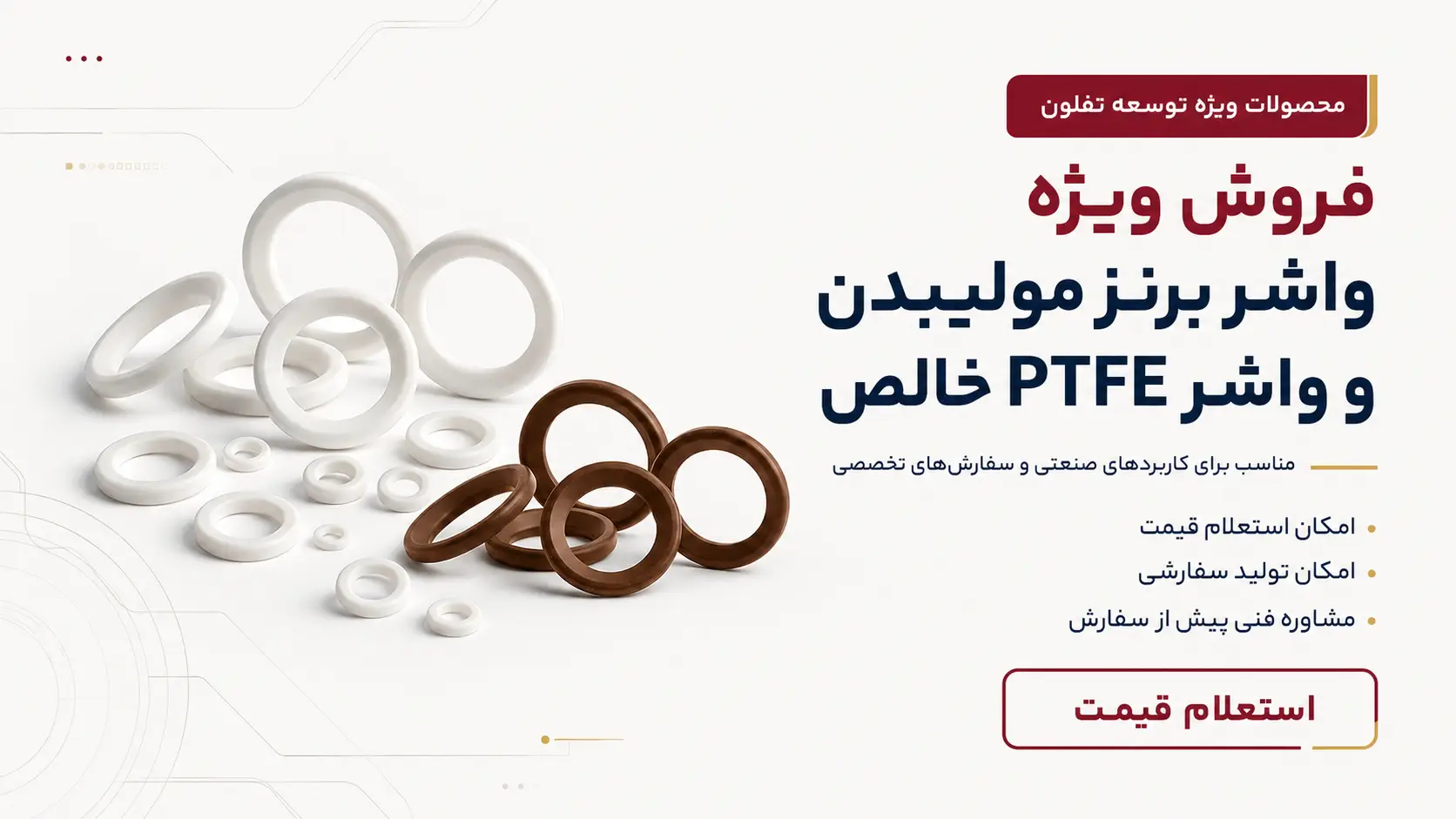
In simple terms, a virgin PTFE gasket is selected when chemical resistance and fluid purity are the top priorities and the pressure and mechanical loads remain within normal limits. If you are dealing with high pressure, high tightening torque, significant wear or vibration, reinforced grades such as glass-filled, carbon-filled, bronze-filled PTFE or advanced composites are typically used to reduce creep and deformation and to increase mechanical stability.
If leakage occurs repeatedly, the first step is to review mechanical factors such as misaligned flanges, incorrect bolt torque, damaged seating surfaces or an inappropriate gasket thickness. If these factors are controlled and the problem still persists, it may be necessary to change the gasket grade – for example, moving from virgin PTFE to reinforced grades (glass-, carbon- or bronze-filled) or more advanced composites. In such cases, providing complete service data to the Tose Teflon technical team is essential.
The flange standard (for example DIN, ANSI and pressure class) is very useful for defining the basic gasket dimensions; however, it is not sufficient to determine the PTFE material grade. To select an appropriate material, the type of medium, pressure, temperature and service conditions must also be taken into account.
Frequently asked questions about custom PTFE gasket orders
Yes. In many cases, a custom gasket can be designed based on measured dimensions, the flange standard and the equipment information you provide. However, having a drawing or design file reduces the risk of error and is recommended for critical projects.
We can manufacture both low quantities (for samples, limited repairs or a few critical points) and higher volumes. From a cost perspective, the higher the quantity, the more balanced the unit price of each custom gasket will be. For orders with continuous consumption, a periodic supply plan can be defined.
The technical review and initial proposal time is usually short and will be communicated once the required information has been completed. Production and delivery time for a custom PTFE gasket depend on the selected grade, dimensions, order quantity and production schedule, and are clearly agreed with you at the quotation stage.
If you already know your preferred grade, you can specify it; however, this is not mandatory. It is sufficient to describe the operating conditions – including type of medium, pressure, temperature and service criticality – and the Tose Teflon technical team will propose the most suitable PTFE gasket grade for your application and explain the reasoning in the technical proposal.
Installation, tightening torque and operating conditions for PTFE gaskets
For many flange and gasket standards, recommended tightening torque tables are available; however, these values must be adjusted for the specific PTFE gasket type, grade, thickness, flange class and actual equipment condition. It is recommended to discuss your project with the technical team before using any generic torque table.
In some services, especially when softer grades and thicker gaskets are used, performing a controlled re-torque after the system has reached stable operating pressure and temperature can help stabilise the seal. Whether this is necessary should be decided based on the grade, flange design and technical recommendations.
In fully dynamic services with significant wear and relative movement, composite and reinforced grades should be used (for example carbon fibre-, bronze-filled or grades containing solid lubricants). The use of virgin PTFE in such conditions is generally not recommended, except for special cases with low mechanical loads and carefully engineered design.
Chemical compatibility, operating temperature and allowable pressure
PTFE is generally one of the most resistant materials against many acids, alkalis and organic solvents. However, in certain specific cases (for example some molten metals or very strong oxidising agents at high temperature), chemical compatibility must be checked more carefully. Providing the exact type of medium and operating temperature is essential for selecting the correct gasket grade.
The allowable temperature range for PTFE gaskets depends on the grade, thickness and service conditions. In general, common PTFE grades can operate over a relatively wide temperature range; but operation close to the limit temperatures, especially when combined with high pressure, must be evaluated technically. Where temperatures exceed the normal PTFE range, alternative materials such as PEEK are considered.
Yes. Sudden temperature changes (thermal shock) can affect the mechanical behaviour of the PTFE gasket and the flange assembly; especially when high pressure and large temperature differences are present at the same time. In such applications, selecting the right grade and thickness and ensuring proper flange design becomes even more important.
It is best to state not only the normal operating pressure but also the design pressure and any transient conditions that may occur. This information helps ensure that the PTFE gasket grade and design are based on the worst reasonably expected conditions, with an appropriate safety margin.
Pricing, delivery time and ordering conditions for PTFE gaskets
The price of a PTFE gasket depends on factors such as grade (virgin or reinforced), dimensions, thickness, quantity, machining complexity and whether it is a standard or custom product. For custom orders, after technical evaluation and grade selection, the price is calculated based on all of these parameters and communicated transparently.
For custom PTFE gaskets, in addition to material cost there are costs for design, production planning, machine setup and dedicated quality control. Moreover, low quantities and non-standard dimensions increase the unit price compared with fully standard, series-produced items. In return, such gaskets help reduce leakage risk and downtime costs at critical points in the system.
For certain standard PTFE gaskets with commonly used sizes and grades, delivery times can be relatively short. For custom orders, delivery time depends on material grade, order quantity, geometry complexity and the current production schedule. These factors are indicated clearly and approximately at the quotation stage so that you can plan your project accordingly.
In many projects, it is possible to produce a trial sample for initial testing under real service conditions. Once the sample performance has been approved, the main production order can be placed. This approach is particularly recommended for critical services or projects with unusual operating conditions.
Your question is not on this list?
If your technical or operational question about PTFE gaskets, grade selection or custom PTFE gasket orders is not covered on this page, you can contact the Tose Teflon technical team directly. Our specialists will review your equipment’s operating conditions and recommend the most suitable sealing solution.