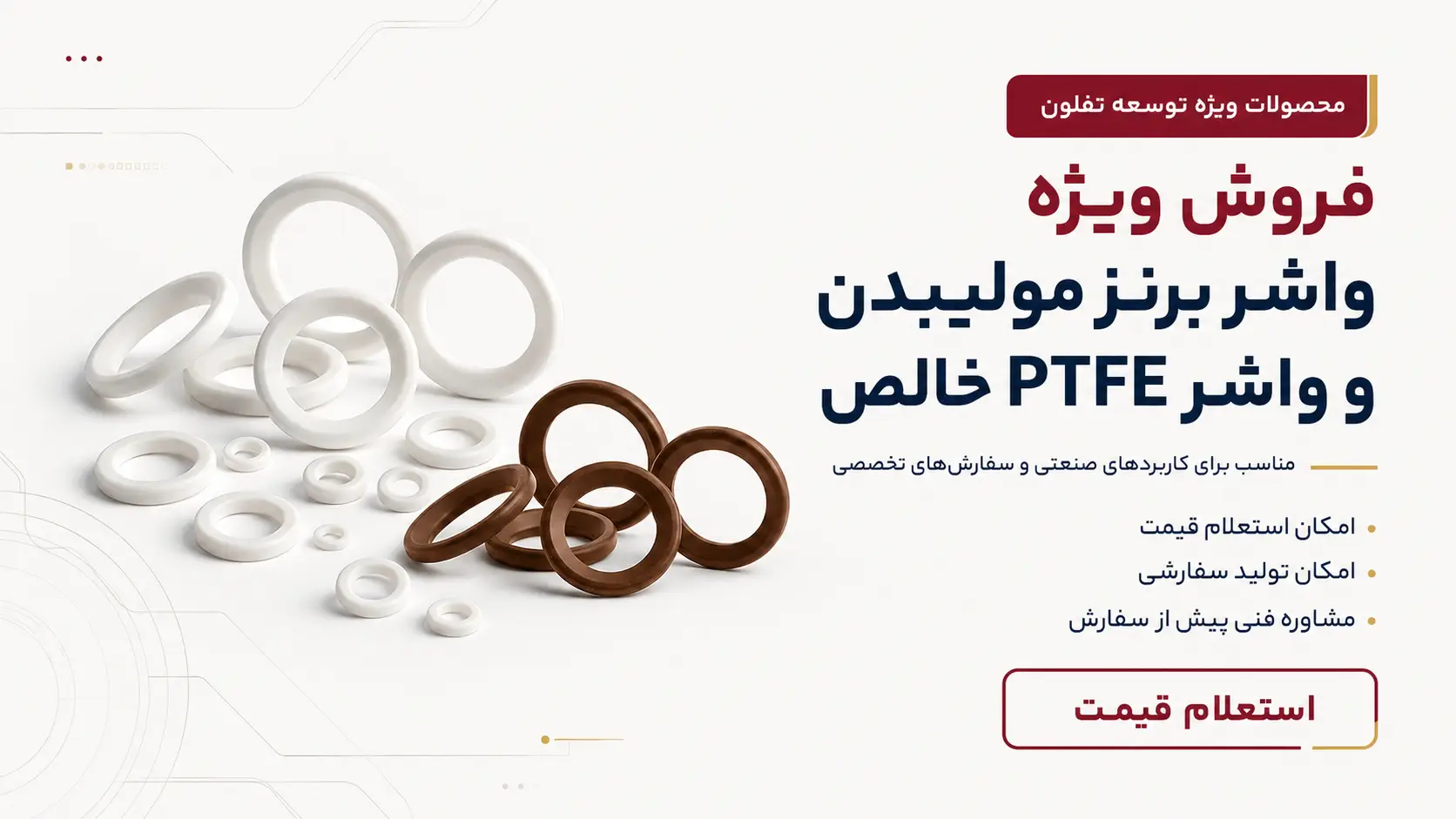
Custom PTFE gasket
Custom PTFE gasket solutions tailored to your operating conditions
Design and manufacture of PTFE gaskets precisely matched to your pressure, temperature, medium and equipment drawings
If your equipment cannot be reliably sealed with a standard, off-the-shelf gasket, you can use this page to specify a fully custom PTFE gasket based on your required dimensions, material and process conditions. Our technical team will review key data such as line pressure, operating temperature, type of medium, flange type and expected usage volume to recommend the most suitable PTFE grade.
The goal is to replace frequent gasket changes and recurring leaks with a robust, engineering-led sealing solution that delivers long-term reliability for your equipment.
Selection of the optimum gasket grade based on pressure, temperature and medium
Manufactured to your drawings, dimensions and flange standard
Technical recommendation before finalising your order and quotation
After you submit your information, a Tose Teflon sales engineer will review your operating conditions and, before production starts, will agree a technical recommendation and indicative pricing with you.
Why choose a custom PTFE gasket?
In many industrial plants, standard off-the-shelf gaskets are not always the best solution. Factors such as high operating pressure, unusual temperatures, corrosive media or non-standard flange dimensions often mean that a catalogue product is not sufficient and a custom PTFE gasket is required instead. At Tose Teflon, custom gasket design and manufacture is carried out based on your drawings, flange standard and real service conditions, so that the sealing solution is engineered specifically for your equipment.
Precise matching to your actual line pressure and temperature
In custom PTFE gasket design, the real operating pressure, temperature and duty cycle of your equipment are taken into account so that the sealing solution is fully aligned with your actual process conditions.
Reduced leakage risk and unplanned downtime
A correctly engineered custom PTFE gasket helps reduce the risk of leakage, minimise unplanned shutdowns and give you better control over maintenance costs.
Grade selection based on engineering, not trial and error
Instead of repeated trial-and-error, our technical team recommends the most suitable option for your custom gasket – selecting from virgin PTFE, glass-filled, carbon-filled, bronze-filled, bronze + molybdenum, carbon fibre-filled and PEEK grades according to your medium and service conditions.
Manufactured exactly to your requirements
Custom gaskets are designed and produced to match your drawings, flange standards, specified tolerances and required quantities – from a few sample parts through to full series production for continuous use.
How to order a custom PTFE gasket
To design and manufacture a custom PTFE gasket, simply provide your dimensional data, operating conditions and contact details in the form below, or get in touch with our technical team. Once we receive your information, the Tose Teflon engineering team will review your pressure, temperature, medium and flange standard, then recommend the most suitable gasket grade along with a price indication and delivery time.
Custom PTFE gasket order form
What parameters can you define in a custom PTFE gasket order?
In a custom PTFE gasket order, you are not limited to changing only the gasket dimensions; based on your equipment, medium, pressure, temperature and consumption volume, you can define the technical specifications of the gasket precisely to match your production line requirements. The following are the key parameters that can be customised at Tose Teflon.
Exact gasket dimensions (ID / OD / thickness)
Inner diameter, outer diameter and gasket thickness are defined exactly according to your drawing and flange standard.
Selection of the appropriate material grade
You can choose between different grades such as virgin PTFE, glass-filled, carbon-filled, bronze-filled, bronze–molybdenum, carbon fibre-reinforced and even PEEK, depending on your service conditions.
Design pressure and temperature range
The custom gasket is designed according to the actual pressure and temperature range of your line so that sealing remains reliable even under critical conditions.
Flange type and connection standard
Gasket design and machining are carried out according to your flange type, connection standard and seating face (seat) geometry.
Production volume and supply pattern
We can manufacture from a few prototype pieces up to full series production and plan ongoing supply in line with your recurring usage.
Service type and line operating conditions
Whether the joint is static, subject to vibration or fully dynamic is taken into account when selecting the material grade and designing your custom gasket.
Selectable PTFE gasket grades for custom designs
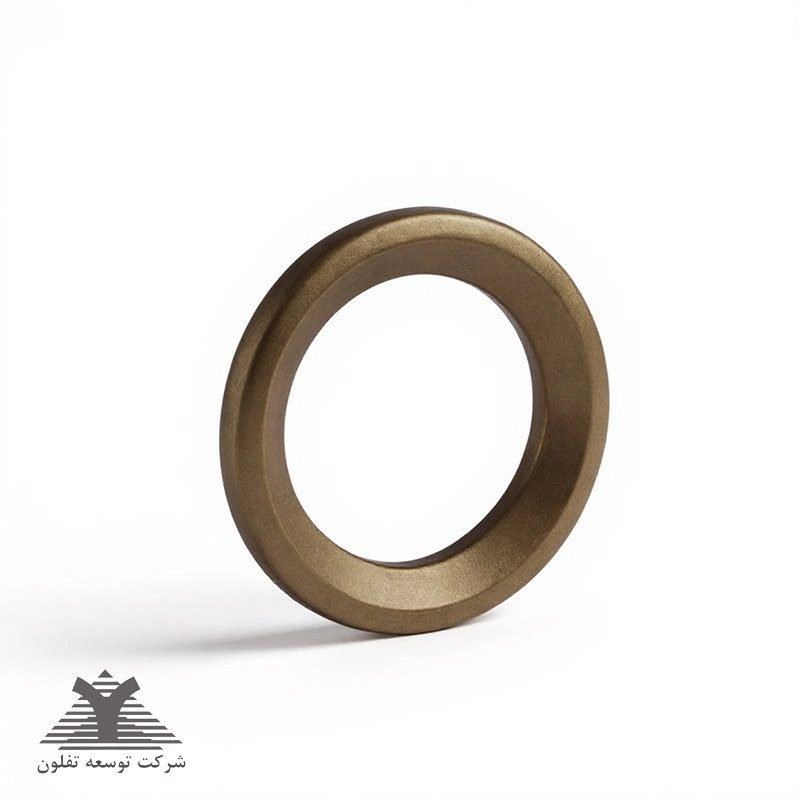
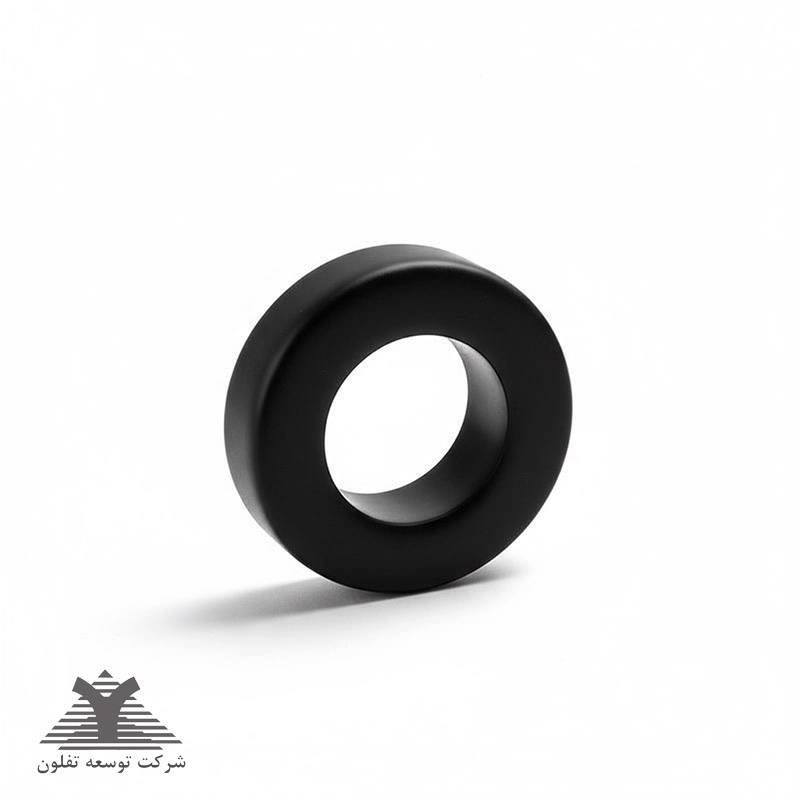
For custom PTFE gasket orders, you are not limited to a single material. Depending on pressure, temperature, type of medium, whether the service is static or dynamic, and how critical the equipment is, different grades can be used. Below is a brief overview of the main grades available from Tose Teflon, to give you a clear picture of the options for your custom gasket design.





Custom PTFE gasket design and delivery process
Once you submit your specifications via the order form, the design and production of your custom PTFE gasket follow a defined workflow. At Tose Teflon, every stage – from receiving your information to final delivery – is backed by technical review and quality control to ensure the gasket matches your real service conditions.
Receiving specifications and analysing operating conditions
In the first step, the details you provide in the form – including dimensions, type of medium, pressure, temperature, service type and required quantity – are reviewed. If there is any ambiguity or missing information, a sales engineer will contact you to clarify the details so that the basis for the custom gasket design is accurate and reliable.
Material grade selection and technical design
At this stage, the technical team selects the most suitable material grade for your custom PTFE gasket based on the service conditions, choosing from options such as virgin PTFE, glass-filled, carbon-filled, bronze-filled, bronze–molybdenum, carbon fibre-reinforced PTFE and PEEK. The gasket dimensions, tolerances and seating-face (seat) details are then defined for final production.
Technical proposal, pricing and final approval
Once the design has been finalised, a technical proposal is sent to you, including the selected grade, indicative pressure and temperature limits, delivery time and pricing for the custom PTFE gasket. After your final approval, the order is formally confirmed and scheduled for production.
Production, quality control and dispatch
In the final stage, the custom gaskets are manufactured according to the approved drawings and material grade. After dimensional and visual quality control, the order is packed and shipped as agreed so that the gaskets can be installed on site without delay.
Production range and technical limits for custom PTFE gaskets
For the design and manufacture of custom PTFE gaskets, it is important to define the dimensional and technical limits from the outset. This section gives a brief overview of the diameter, thickness and service ranges in which Tose Teflon can supply custom gaskets, and in which cases a technical review is required before the order is confirmed.
1. Dimensional range available
-
Inner diameter (ID): Capability to produce from small IDs up to large industrial diameters according to flange standards and equipment type
(the ultimate limit, depending on grade and thickness, is confirmed at the technical enquiry stage). - Outer diameter (OD): Design and manufacture of ring, annular and profiled gaskets in a wide range of outer diameters, according to your drawing or specified standard.
- Gasket thickness: Ability to produce in common thicknesses as well as special thicknesses for demanding services, subject to the limitations of each grade.
- Seat form and geometry: Capability to manufacture flat gaskets, grooved gaskets, multilayer designs and special profiles according to your drawing and design file.
2. Typical pressure and temperature ranges
- Operating pressure: PTFE and reinforced PTFE gasket designs can cover low to high pressures in industrial flanges, taking into account the service type (static or dynamic) and flange class.
- Operating temperature range: Different PTFE grades, composites and PEEK are used to cover typical industrial temperature ranges; the exact permissible range is defined for the selected grade in the technical proposal for each project.
-
Type of medium: Material compatibility is assessed for a wide spectrum of industrial media, from water and oils to many acids, solvents and process fluids.
For special or borderline cases, material compatibility with the medium is confirmed before production.
3. Technical considerations and limitations
- Technical review required before final commitment: For very critical services (near the limits of pressure and temperature, highly corrosive media, fully dynamic service), grade selection and gasket design are not finalised without a detailed review of the application data.
- Different grades, different pressure and temperature limits: The maximum allowable pressure and temperature are not the same for virgin PTFE, filled PTFE grades and PEEK. For each project, these limits are defined separately and communicated in the technical proposal.
- Tolerances and machining accuracy: Achievable dimensional tolerances depend on the material type, gasket diameter and production method. For projects requiring special precision, tolerances are agreed in advance before manufacturing starts.
- Lead time and order quantity: Lead time and production planning depend on order quantity, geometry complexity and the selected grade. For custom orders, these points are discussed and agreed with you at the quotation stage.
Industries that use custom PTFE gaskets
Custom PTFE gasket orders are typically considered when operating conditions go beyond the limits of a general-purpose gasket – where pressure, temperature, medium or flange design are critical or non-standard. Tose Teflon’s custom gasket design and manufacturing services can be applied across a wide range of process, energy and infrastructure industries. Below is a brief overview of some of the main application areas.
Oil, gas and petrochemical
Used in high-pressure flanges, process lines and critical equipment where gasket leakage can lead to line shutdowns or safety risks.
Chemical and resin industries
Suitable for plants producing chemicals, resins and organic solvents where high chemical resistance and correct PTFE gasket grade selection are essential.
Steam, boiler and thermal systems
Applied in steam flanges, heat exchangers and hot-oil circuits, where correct gasket design has a direct impact on the performance and safety of the thermal system.
Food and hygienic industries
For selected food and hygienic lines that require PTFE chemical resistance together with a dedicated sealing design, custom gaskets can be evaluated and engineered.
Power plants, energy and infrastructure
Used at critical points in steam networks, cooling-water systems, oil circuits and process lines in power plants and energy facilities where downtime is highly costly.
Water, wastewater and industrial fluids
Used in industrial water transfer lines, process wastewater and treatment circuits where the combination of pressure, corrosion and long-term sealing performance is critical.
Comparison table – “standard gasket” vs “custom PTFE gasket”
When is a standard gasket sufficient and when do you need a custom PTFE gasket?
In every project, it is not always necessary to choose a custom PTFE gasket from the start. In many simple applications, a standard, off-the-shelf gasket is more than adequate. However, when pressure, temperature, medium or flange design move beyond normal conditions, a custom gasket can significantly reduce the risk of leakage, downtime and maintenance costs.
| Condition / criterion | Use of a standard gasket | Ordering a custom PTFE gasket |
|---|---|---|
| Type of project and criticality level | General projects with normal pressure and temperature, where minor leakage does not create a high level of risk. | Critical points in the system, higher pressure or temperature, and services where leakage or line shutdown is costly. |
| Flange design and dimensions | Standard flanges, common dimensions and the possibility of using off-the-shelf sizes. | Non-standard flanges, uncommon dimensions and applications that require gaskets made to drawing or with specified tolerances. |
| Pressure and temperature conditions | Limited pressure and temperature within conventional ranges, without severe shocks or harsh duty cycles. | High pressure, special temperature conditions, pressure and thermal shocks, or continuous operation close to the design limits. |
| Type of medium and corrosiveness | Relatively mild media, or services where general-purpose gaskets are already standardised. | Corrosive media, special solvents and combined services that require precise selection of the PTFE gasket grade. |
| Service behaviour (static or dynamic) | Static connections with low vibration and no significant relative movement between surfaces. | Dynamic services or connections with vibration and wear, where gasket design and grade must be tailored to the application. |
| Initial cost versus cost of downtime | When the cost of downtime is low and gasket replacement is simple and inexpensive. | When downtime, production loss, safety or environmental impact are costly, and investing in a custom gasket is justified. |
| Lead time and availability | An immediate need for a standard gasket size that is already in stock or quickly available on the market. | The possibility to plan production and supply; priority is given to technical accuracy and full alignment with operating conditions. |
| Quantity and consumption pattern | Limited consumption, simple spares or cases where periodic replacement is not a problem. | Continuous consumption at one or more defined locations, where series production and a regular supply plan for custom PTFE gaskets can be established. |
| Practical conclusion | For general, low-risk applications, a standard gasket is a fast, simple and cost-effective choice. | For critical points, special operating conditions or when you have already experienced repeated leaks and gasket failures, ordering a custom PTFE gasket is a more engineered and sustainable approach. |
Frequently asked questions about ordering custom PTFE gaskets
Before placing a custom PTFE gasket order, technical and purchasing teams usually have a number of recurring questions – from what information is needed to start the design, to lead times and minimum order quantities. The following section covers the most common questions and concise, practical answers to give you a clearer picture of the custom ordering process at Tose Teflon.
For initial evaluation and custom gasket design, it is best to provide at least the following information in the form: main gasket dimensions (inner diameter, outer diameter, thickness), type of medium, operating pressure and temperature, service type (static or dynamic), equipment or flange type, approximate consumption volume and, if possible, a drawing or design file. The more complete this data is, the more accurately and quickly the grade selection and gasket design can be carried out.
Yes, the absence of a drawing does not prevent you from placing an order; however, in this case you will need to provide the main gasket dimensions and flange details with greater accuracy. In many cases, a custom PTFE gasket can be designed based on the flange standard and the information you supply. If necessary, the technical team will coordinate with you to complete the details.
The technical review and initial pricing phase is usually short and will be communicated to you within an agreed timeframe after your information is received. Production and delivery time for a custom PTFE gasket depend on factors such as the selected grade, geometry complexity, order quantity and production schedule. These points are clearly specified at the technical proposal and quotation stage so you can plan your project timeline accordingly.
We can manufacture both small quantities (samples, initial testing or a few critical points) and larger volumes for series production. However, from an economic standpoint, the higher the quantity, the more balanced the unit cost of each custom gasket will be. For projects with continuous consumption, a periodic supply plan can be defined to optimise both cost and lead time.
No, this is not mandatory. If you are unsure about the appropriate grade, simply enter the operating conditions – including type of medium, pressure, temperature, service type and equipment criticality – in the form. Based on this information, the Tose Teflon technical team will recommend the most suitable custom PTFE gasket grade from options such as virgin PTFE, filled grades (glass, carbon, bronze, carbon fibre, etc.) or PEEK, and the rationale for the selection will be explained in the technical proposal.
When operating conditions are entirely conventional and gasket replacement is straightforward and low-cost, using a standard gasket is a quick and economical solution. However, if the pressure or temperature is higher than normal, the medium is corrosive or special, the flange has non-standard dimensions, the service is dynamic and abrasive, or leakage at that point could cause line shutdown and serious damage, then ordering a custom PTFE gasket is a sound engineering decision to reduce risk and improve long-term sealing reliability.