Guide to selecting the best POM grade for wear-intensive components
تولید و ماشینکاری قطعات پلیمری مهندسی
02188175113
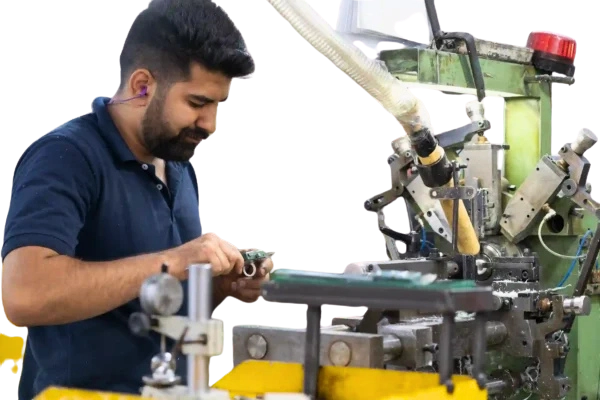
ساخت دقیق PTFE، پلیآمید و پلیاستال با تجهیزات تخصصی.
پست های مرتبط
-
تفاوت واشر PTFE و کلینگریت (CNAF)؛ کدام برای شرایط کاری شما مناسبتر است؟
-
تفاوت واشر PTFE و گسکت اسپیرال وند؛ کدام برای فلنج مناسبتر است؟
-
تفاوت واشر PTFE با NBR، EPDM و سیلیکون؛ کدام متریال مناسبتر است؟
-
علت نشتی فلنج چیست؟ ۷ خطای انتخاب، ابعاد و نصب واشر PTFE
-
انتخاب واشر برای اسیدها و سیالات خورنده؛ چه زمانی PTFE خالص مناسب است؟
Guide to selecting the best POM grade for wear-intensive components
Guide to selecting the best POM grade for wear-intensive components
Polyacetal (POM) is one of the most important engineering polymers for manufacturing parts exposed to friction and wear. Thanks to its low coefficient of friction, good mechanical strength and dimensional stability, it is widely used in moving systems and industrial components.
However, choosing between different grades such as POM-C and POM-H requires a clear understanding of their properties and the operating conditions of the part.
Key properties of polyacetal (POM) in wear applications
As an engineering polymer for wear parts, POM offers a very attractive combination of mechanical and functional properties. Some of the most important are:
- Very low friction and smooth running on contact surfaces
- Good wear resistance in repetitive and reciprocating applications
- Dimensional stability under temperature changes and loading
- Excellent machinability (CNC) with a smooth final surface finish
- Low moisture absorption and stable behaviour in typical industrial environments
These characteristics often allow POM to outperform certain polyamides and polyethylenes in wear-prone components.
POM-C vs POM-H – which polyacetal grade is more suitable?
1) POM-C (copolymer)
POM-C, or copolymer polyacetal, is known for its superior dimensional stability and higher resistance to environmental stress and cracking. It is often the safer choice in applications where the part is exposed to chemicals or temperature variations
Where long-term dimensional stability, resistance to environmental/chemical attack and predictable behaviour over time are important, POM-C can extend component life and reduce performance drift.
2) POM-H (homopolymer)
POM-H, or homopolymer polyacetal, is harder and more wear-resistant and is therefore very well suited for wear parts under higher mechanical loads.
This type of polyacetal offers higher tensile strength and hardness compared with POM-C.
In applications where the part is subjected to repeated loads, reciprocating motion and continuous contact with other surfaces, POM-H can significantly improve wear resistance and service life.
Summary of this section :
If your main priority is dimensional stability and chemical resistance, POM-C is usually the better choice.
If your focus is on wear, hardness and mechanical load capacity, POM-H is generally more appropriate.
Typical applications of POM in wear-intensive industrial components
Because of its unique property profile, POM is used in a wide variety of moving and mechanical parts.
Common industrial applications include:
- Gears and industrial wheels requiring smooth motion and low wear
- Rollers, shafts and spacers in production lines and conveyor systems
- Bushings and bearing elements exposed to sliding or rotating motion
- Guides and rails in precision motion systems
- CNC-machined parts that need a fine surface finish and tight dimensional control
In many of these applications, using polyacetal instead of metal or other polymers can reduce component weight, lower lubrication requirements and keep wear under control over time.
How to choose the best POM grade for your part
To select the appropriate POM grade for a specific industrial component, you should consider several key parameters:
- Wear level and type of contact: continuous friction, impact, or reciprocating motion
- Mechanical load: low, medium or high
- Temperature conditions: ambient and operating temperature of the part
- Presence of chemicals or moisture: contact with fluids or corrosive environments
- Required dimensional accuracy: acceptable tolerance over the service life of the component
By analysing these factors, you can make an informed choice between POM-C and POM-H and leverage the full potential of this engineering polymer in wear-critical designs.
Conclusion: POM as a reliable choice for wear-exposed components
Polyacetal (POM) is one of the most reliable materials for designing and manufacturing wear-intensive parts thanks to its low friction, good wear resistance and dimensional stability.
Correctly choosing between POM-C and POM-H can extend component life and help prevent unplanned downtime in production lines.
If loading conditions, temperature and operating environment are properly analysed,
POM can provide a robust and cost-effective solution to many wear-related challenges in industry.